About
Conference Objectives
Given the growing global interest in sustainable food systems and an expanding body of scientific evidence highlighting the health, environmental and functional benefits of fermented foods, there is an increasing need to foster interdisciplinary exchange and drive innovation.
Building on the success of the inaugural edition, the 2nd International Conference on Fermented Foods aims to bring together leading experts from academia and industry to share cutting-edge insights, strengthen collaborations and accelerate the translation of research into impactful solutions. Specifically, the conference aims to:
- Advance scientific understanding of fermentation across diverse food matrices.
- Strengthen interdisciplinary collaboration among researchers, academia, industry and policy stakeholders to address key challenges and unlock emerging opportunities in the field of fermented foods.
- Drive innovation in the development of novel fermented foods, processes and biotechnological approaches.
- Showcase the critical role of fermented foods in enhancing human health, improving food safety and security, and supporting sustainable food systems.
- Provide a global platform for knowledge exchange, dialogue and networking within the international fermented foods community.
Conference History
The International Conference on Fermented Foods (ICFF) was established in response to the growing scientific and industrial significance of fermented foods as a highly dynamic and multidisciplinary field. ICFF provides an international platform dedicated to advancing knowledge and fostering dialogue at the intersection of food science, microbiology, biotechnology and sustainable food systems.
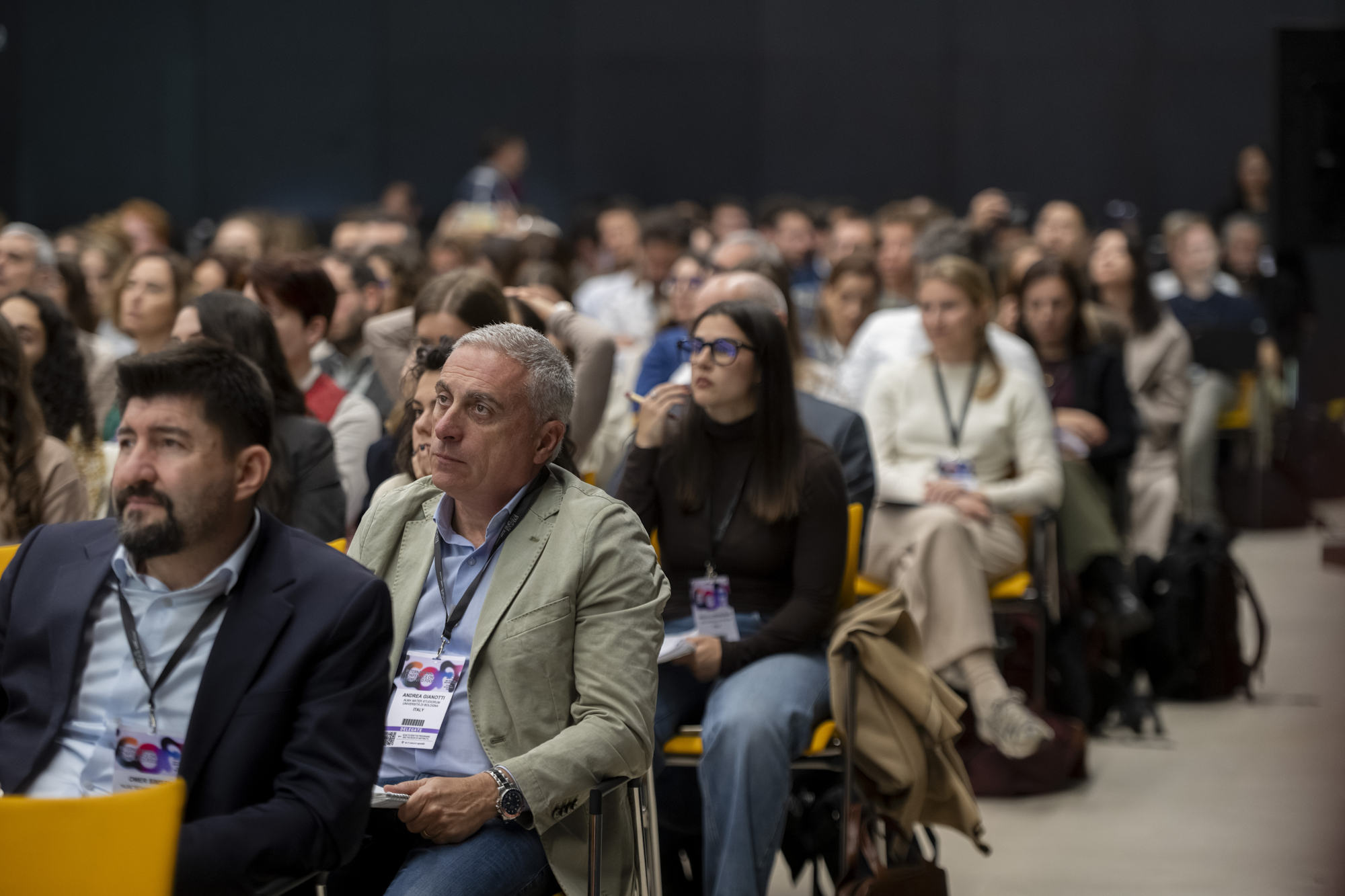
The first edition of ICFF, held in 2025, marked an important milestone, welcoming over 300 participants from 23 countries and bringing together leading experts from academia, research institutions and industry worldwide. It fostered a vibrant and intellectually stimulating environment for the exchange of ideas, the presentation of cutting‑edge research and the discussion of emerging opportunities in fermentation science and industrial applications.
Building on these strong foundations, ICFF is held every two years, serving as an international point of reference and cultivating an enduring global community dedicated to advancing the science of food fermentation.
Conference Topics
The 2nd International Conference on Fermented Foods offers a unique platform to explore the full scope and complexity of this dynamic and rapidly evolving field, bringing together diverse perspectives and interdisciplinary expertise. The programme encompasses:
.
SESSIONS
.
- Artisanal/Traditional Fermentations for the Future
Fermentation is arguably the oldest food biotechnology, yet today it stands at the forefront of innovation in nutrition, health, sustainability and product development. Across cultural traditions, it is evolving from a method of preservation into a powerful framework for creating foods and ingredients with enhanced flavour, diversity, shelf life and functional value. Traditional and artisanal food fermentations preserve the ancient knowledge that inspires our drive to innovate and shape the future of food.
. - Novel Fermentations for the Circular Economy
Innovative fermentation tools and strategies valorise underutilised biomass, agro-industrial by-products and food waste into added-value products such as functional ingredients and bioactive compounds. Advances in microbial innovation, process optimisation, and sustainable bioprocessing significantly enhance resource efficiency and reduce environmental impact. By bridging microbiology and applied food science, this theme showcases how fermentation can drive the transition toward resilient, circular food systems and offer one of the most accessible strategies for strengthening food security.
. - Fermentations for Functionality
Microorganisms, substrates and fermentation conditions can be strategically harnessed to improve nutritional quality, bioavailability and health-promoting potential. What makes fermentation functionality especially compelling is its interdisciplinary nature: advances in microbiology, food science, biotechnology, nutrition and consumer science are converging to redefine what fermented products can deliver as measurable functionality and wellbeing. The paradigm is shifting toward designing specific food fermentations to deliver targeted health-promoting functions, supported by mechanistic and clinical evidence.
. - Advanced Technologies for Food Microbiomes
To understand, design and exploit food-associated microbiomes with greater precision, it is crucial to leverage emerging technological approaches. This theme spans advanced microbial ecology, omics-based characterisation, synthetic and defined microbial communities, precision fermentation and the development of targeted microbial functions for food quality, safety, sustainability and innovation. The emphasis is on how modern tools can move food microbiology beyond descriptive analyses and toward predictive approaches and controllable microbial systems, supporting the development of next-generation fermented foods, functional ingredients and microbiome-informed food technologies.
. - Technology Transfer in Fermented Foods
Technology transfer in fermented foods serves as a vital bridge between scientific discovery, traditional knowledge and industrial application, enabling innovations from research, pilot plants and artisanal practices to be transformed into scalable, safe and commercially viable solutions. A dedicated session will bring together industry and research experts in an interactive roundtable to exchange insights, identify needs and explore opportunities for collaboration. The discussion will focus on translating scientific knowledge into industry-relevant solutions, building partnerships that accelerate innovation, highlighting successes, identifying gaps from the industry perspective and addressing how industry expects research to support implementation and market uptake.
14 June - Innovation in Action for Companies
On 14 June, participants are invited to a dedicated Company Day designed specifically for industry professionals. The programme will explore innovation and strategies for successfully translating research into business value. Through business expert insights and practical examples, attendees will learn how to foster a culture of innovation and turn scientific advances into impactful solutions that strengthen organisational competitiveness. The day will also feature an interactive workshop, providing participants with hands-on tools and approaches for driving innovation within their own organisations.
Please note that separate registration is required for the satellite event on 14 June, Innovation in Action for Companies.
Scientific Committee
We are proud to bring together an outstanding international Scientific Committee composed of renowned experts in fermented foods from across the globe. Their collective expertise is instrumental in developing a high-quality scientific programme and ensuring the conference serves as a leading platform for knowledge exchange and innovation. The members of the Scientific Committee are:
- Luca S. Cocolin, Department of Agricultural, Forest and Food Sciences, University of Turin, Italy
- Christophe Courtin, Department of Microbial and Molecular Systems, Laboratory of Food Chemistry and Biochemistry and Leuven Food Science and Nutrition Research Centre (LFoRCe), KU Leuven, Belgium
- Luc De Vuyst, Belgium
- Raffaella Di Cagno, Faculty of Agricultural, Environmental and Food Sciences, Free University of Bozen-Bolzano; Director of ICOFF; Bozen-Bolzano, Italy
- Monica Gatti, Department of Food and Drug, University of Parma, Italy
- Marco Gobbetti, Faculty of Agricultural, Environmental and Food Sciences, Free University of Bolzano-Bozen; Chief Scientist, NOI Techpark; Chair of the ICFF Conference; Bozen-Bolzano, Italy
- Nam Soo Han, Department of Food Science and Biotechnology, Chungbuk National University, South Korea
- Alan Kelly, School of Food and Nutritional Sciences, University College Cork, Ireland
- Rosalba Lanciotti, Department of Agricultural and Food Sciences, University of Bologna, Italy
- Shao Quan Liu, Department of Food Science and Technology, National University of Singapore, Singapore
- Maria Marco, Department of Food Science and Technology, University of California, Davis CA, USA
- David Rodriguez-Lazaro, Research Centre for Emerging Pathogens and Public Health at the University of Burgos, Spain
- Ömer Şimsek, Department of Food Engineering, Faculty of Chemical and Metallurgical Engineering, Yıldız Teknik University, Türkiye
- Eddy J. Smid, Laboratory of Food Microbiology, Wageningen University, The Netherlands
- Effie Tsakalidou, Department of Food Science and Human Nutrition, Agricultural University of Athens, Greece
- Douwe Van Sinderen, School of Microbiology, University College Cork, Ireland
- Emanuele Zannini, Department of Environmental Biology, Sapienza University of Rome, Italy
- Jian Zhao, School of Chemical Engineering, the University of New South Wales, Sydney, Australia
Organizing Committee
The organising committee is composed of highly skilled and dedicated professionals from the Micro4Food Laboratory, the International Centre on Food Fermentations (ICOFF) and NOI Techpark:
- Lead: Sandra Fleischmann, NOI Techpark
- Kashika Arora, ICOFF
- Raffaella Di Cagno, Free University of Bozen-Bolzano, ICOFF
- Matthias Fill, NOI Techpark
- Lisa Geier, NOI Techpark
- Olga Nikoloudaki, Free University of Bozen-Bolzano, ICOFF
- Andrea Polo, Free University of Bozen-Bolzano, ICOFF
- Federica Pompeo, NOI Techpark
- Ali Zein Alabiden Tlais, Free University of Bozen-Bolzano, ICOFF